Where does climate communications go next?
COMMUNITY ENGAGEMENTCLIMATE COMMUNICATIONSPARTNERSHIP DEVELOPMENTTRUSTED MESSENGERS
San Leandro, located between Oakland and Hayward, faces some of the highest environmental burdens in California. Lower-income neighborhoods along the eastern side of the city are located next to the I-880 corridor and concentrated industrial activity. While this industrial base sustains the city’s economy, it also exposes residents to disproportionate air quality and climate risks.
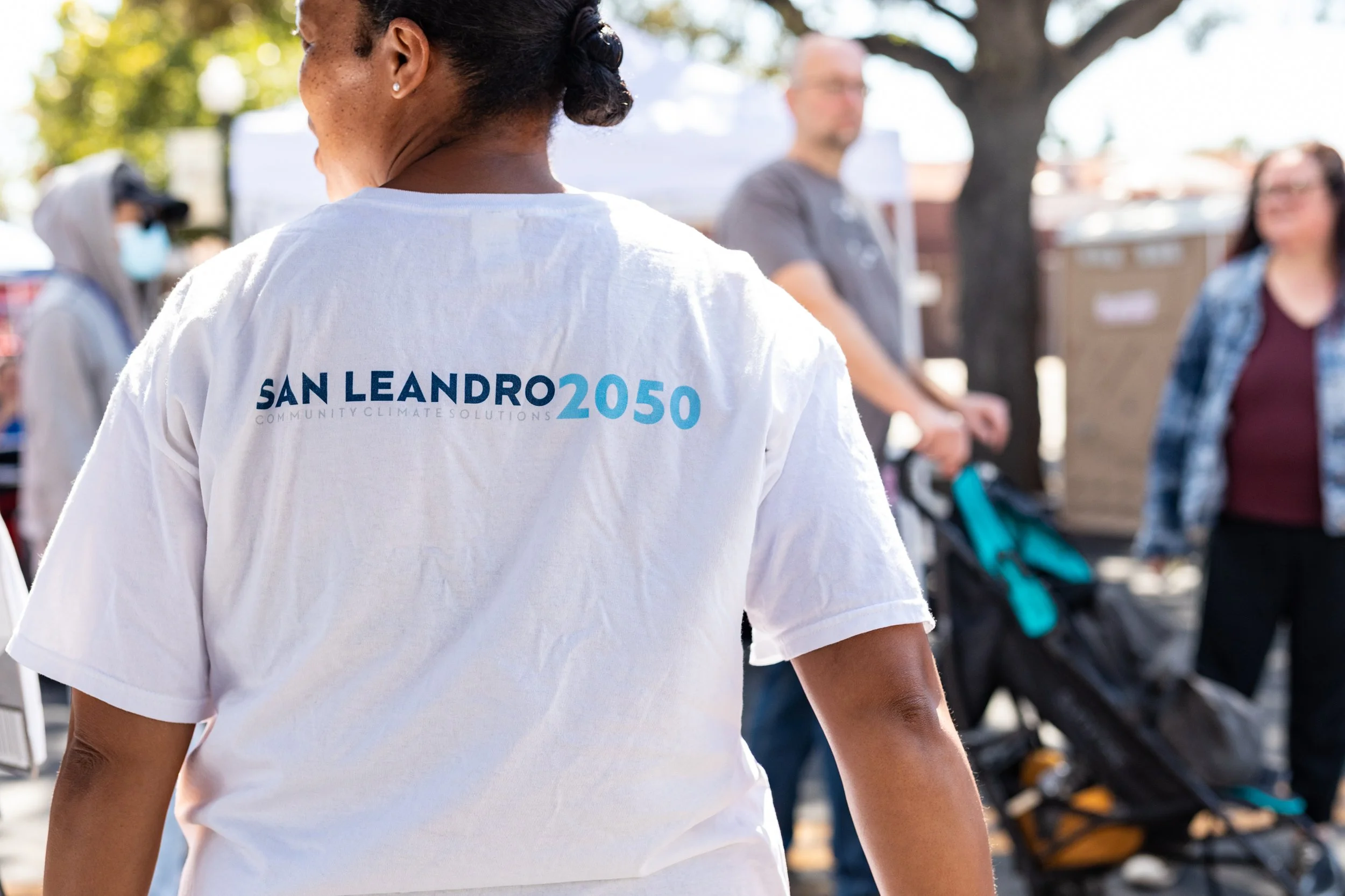
San Leandro 2050 launched in 2019 based on the idea that community participation is essential to reducing greenhouse gas emissions and strengthening local resilience. Over time, the initiative has taught us how engagement and climate communications can and should transform to inspire resident participation and leadership.
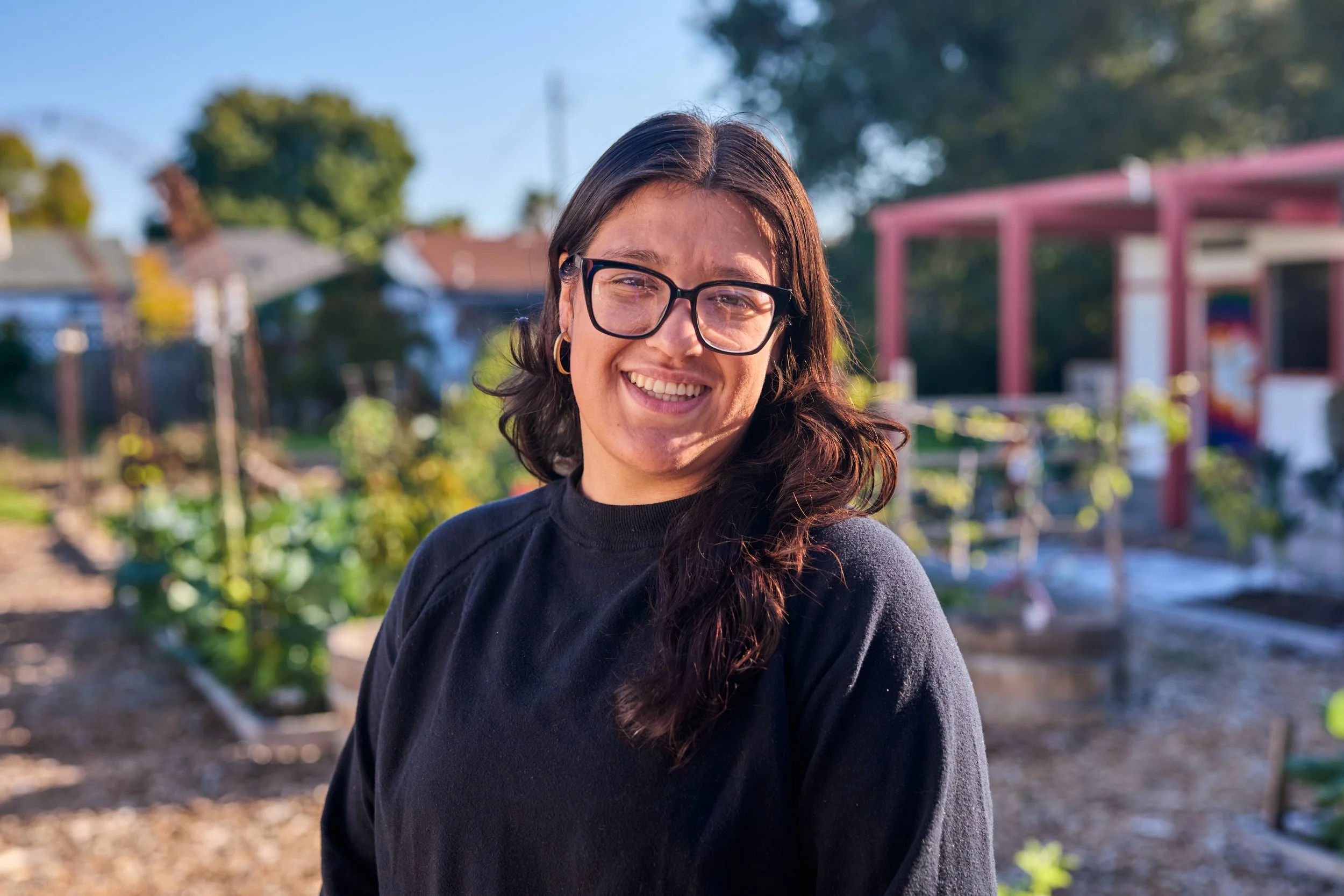
“Over the last decade, climate communication has shifted from proving the problem to building public agency. Images from less than a decade ago, like melting ice shelves or polar bears, did not help people see themselves in the story. After that, communications focused on disaster focused messaging that grabbed attention, but didn’t provide a clear path forward. Today, more people than ever believe in climate change but are flooded with information, frustrated by inaction, and don’t know how to take action. That’s why San Leandro 2050’s strategy has shifted from ‘reduce GHGs’ to building the conditions for action: spaces where people can connect, build trust, and take part in solutions together.”
-Emily Breslin, Open Media
Engagement to empower
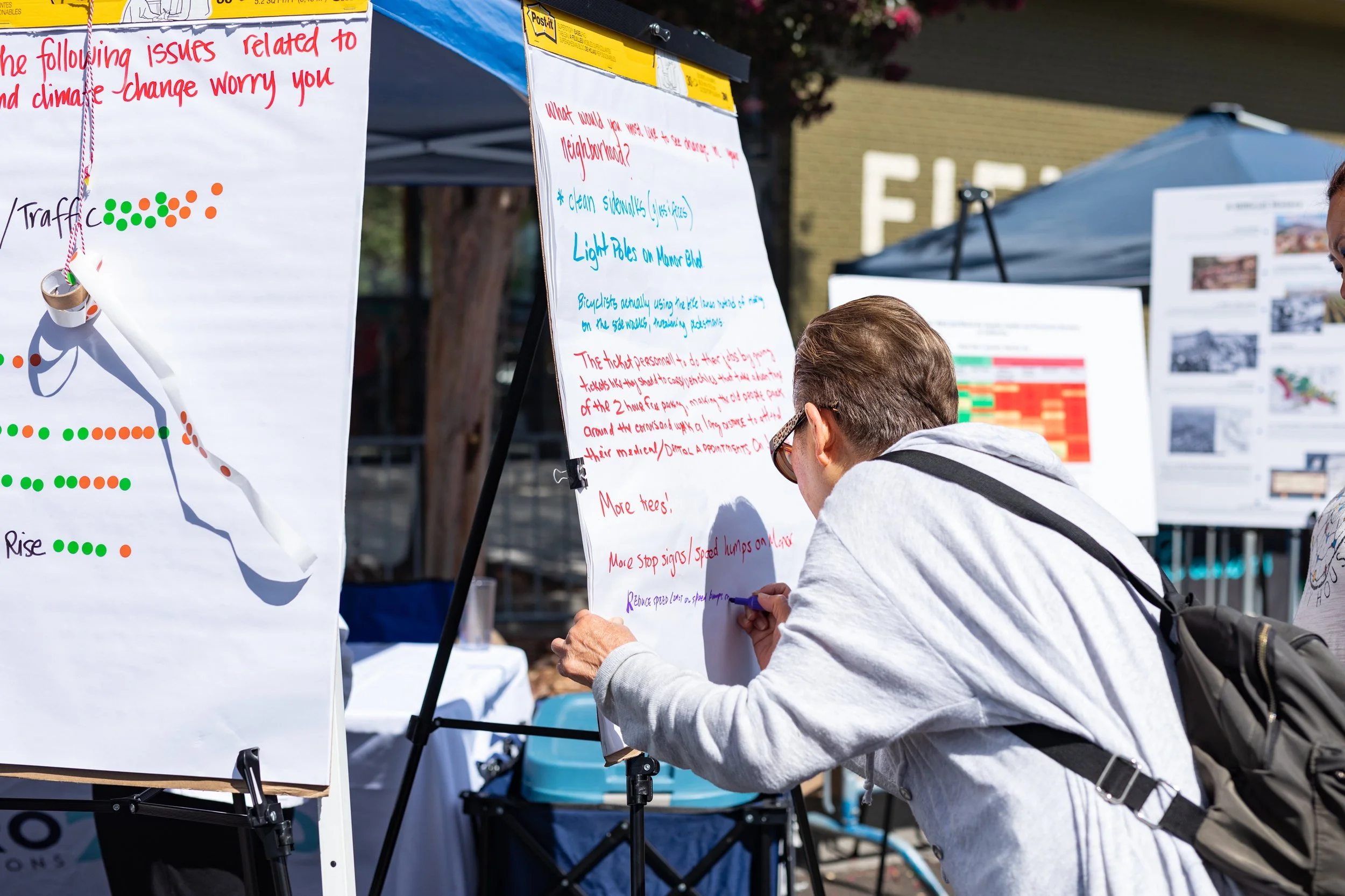
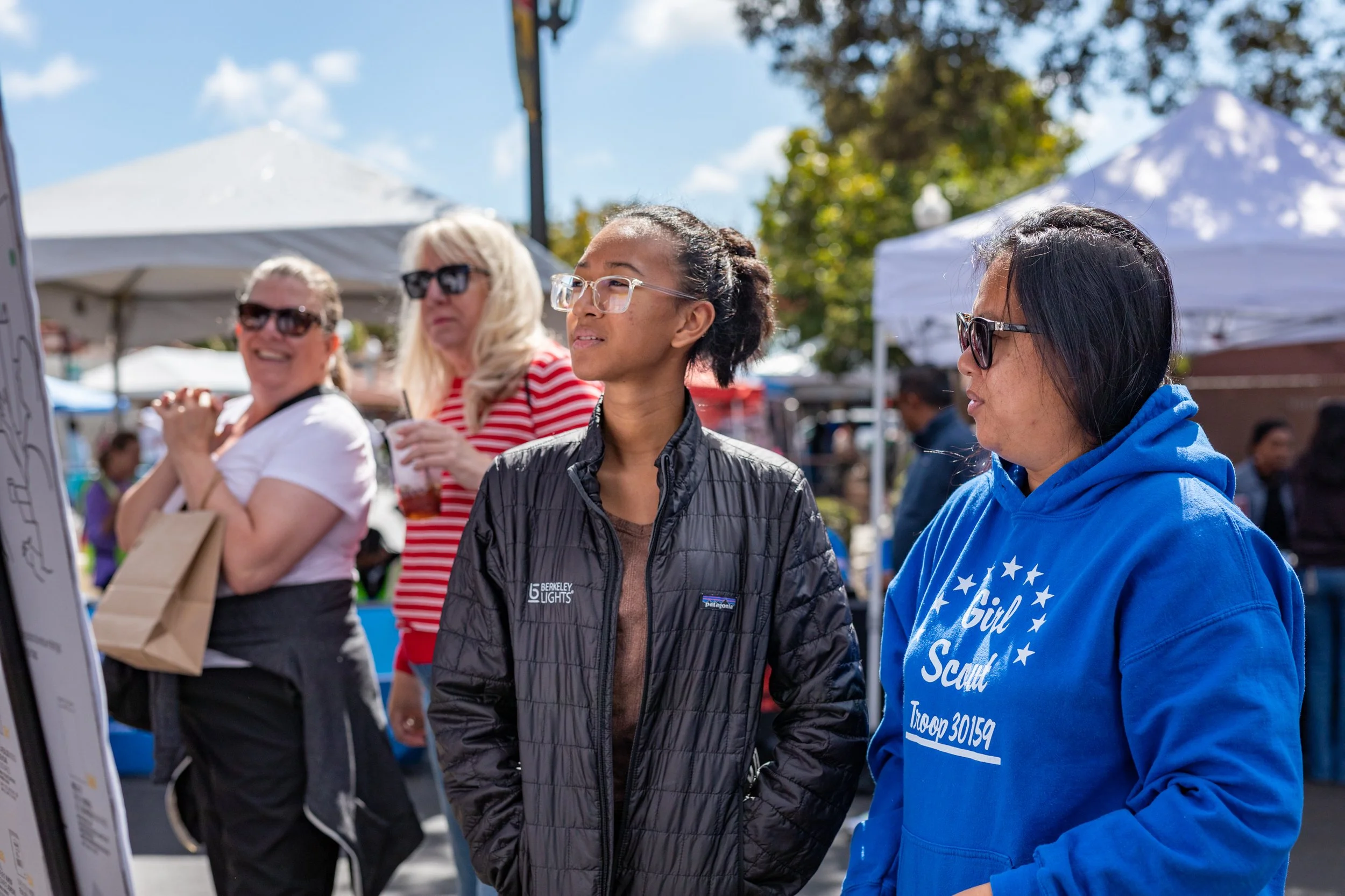
With support from over $1 million in state grants, we helped the San Leandro 2050 team convene meetings across neighborhoods throughout the city. Residents contributed to the development of an air quality and greenhouse gas reduction plan, which over time was organized around four community priorities:
Electrification of trucks and creation of charging infrastructure
Safe walking and biking for all
Affordable housing
Strengthening community connection
As we set out, we aimed to move toward the higher levels of engagement outlined in Rosa Gonzalez’s Spectrum of Community Engagement to Community Ownership. Outreach generated a clear and shared set of priorities. However, over time, it became clear that participation alone was not sufficient to produce lasting change. For climate solutions to take hold, communities must not only be consulted, but positioned to shape, adapt, and sustain the work over time. Government can set direction and invest in solutions, but it cannot, on its own, generate the trust, behavior change, and sustained participation required for implementation. Policies and plans are only as effective as the degree to which they are understood, trusted, and carried forward by the people they are intended to serve.
What emerged in San Leandro is that the primary barrier was not a lack of ideas or willingness to participate, but the absence of structures that allow people to remain engaged over time. True ownership depends on continuity—ongoing relationships, shared spaces, and clear pathways for residents to influence decisions and contribute to implementation.
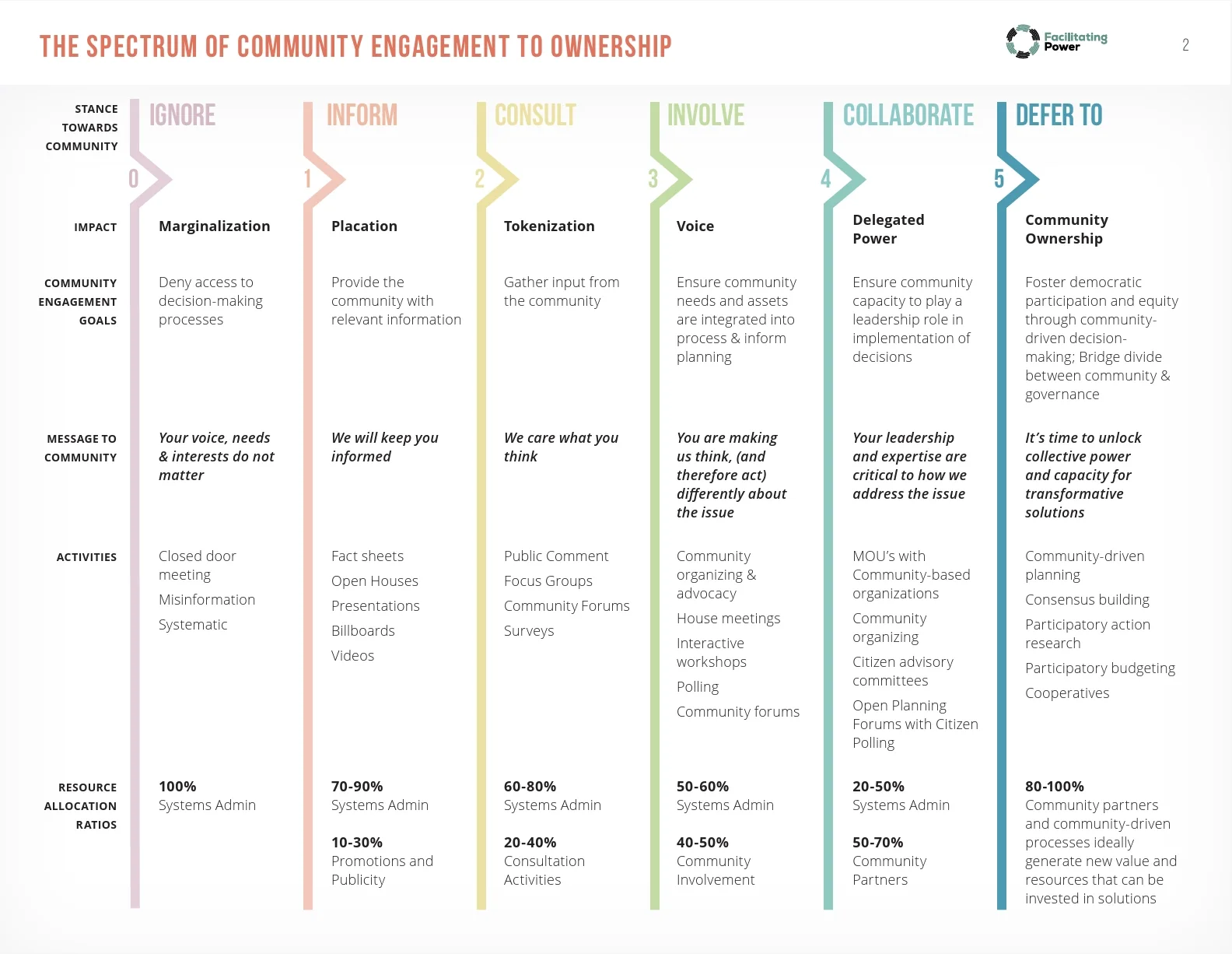
The Spectrum of Community Engagement to Community Ownership, Credit: Rosa Gonzalez and Movement Strategy Center, 2019
Shifting language from disaster to community pride and livability
While greenhouse gas reduction was the core strategy of San Leandro 2050’s work, it was rarely the language residents used to describe their concerns.
Residents spoke about asthma, truck traffic near schools, the lack of affordable housing, safe streets for their children, and knowing their neighbors. What was made clear to us again and again is that the way government was framing climate change was irrelevant to the issues people cared about.
Our experience on the ground was backed up by research, which shows that abstract climate framing often fails to mobilize broad participation. Issues framed in terms of immediate quality of life, things like health, safety, cost, connection between neighbors leads to stronger engagement over time. So while mitigation functioned as SL50’s strategy, the possibility of a better life became the motivating frame for engaging with residents.
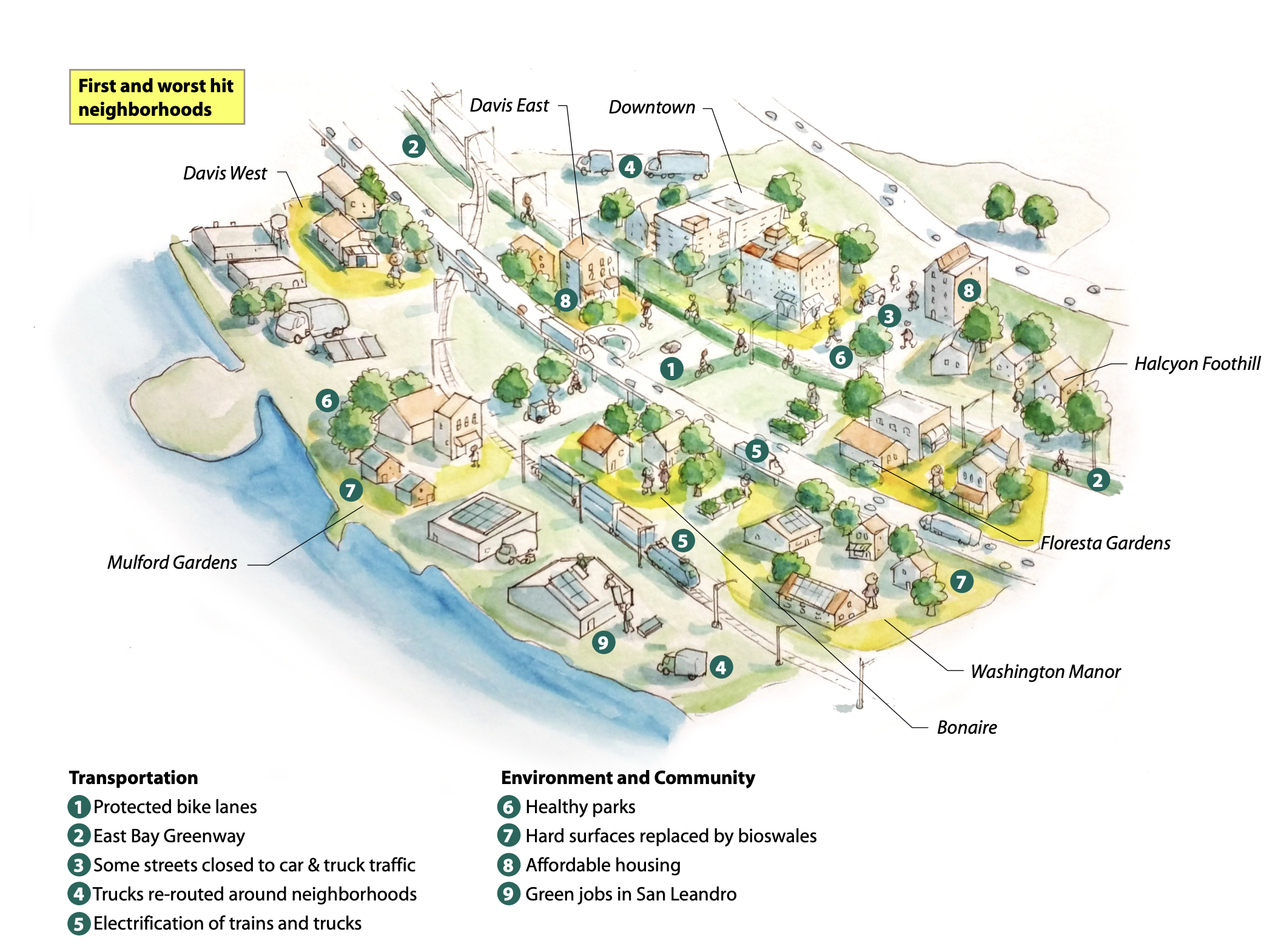
Illustration created for San Leandro 2050 by local artist and community activist Alfred Twu.
Creating an onramp
Even with improved framing, engagement remained episodic with individuals attending meetings and contributing ideas, but falling steeply off after this. Research on civic participation and disaster resilience emphasizes that durable change depends on more than consultation. Communities with stronger social cohesion — repeated interaction, shared spaces, dense relational networks — demonstrate greater capacity to implement policy and respond to crisis.
In San Leandro like many other American cities, civic infrastructure had eroded over decades. Accessible gathering spaces were limited, cross-neighborhood interaction was inconsistent. The constrain we were feeling was not a lack of concern about livability but rather a lack of durable structures to sustain collective action.
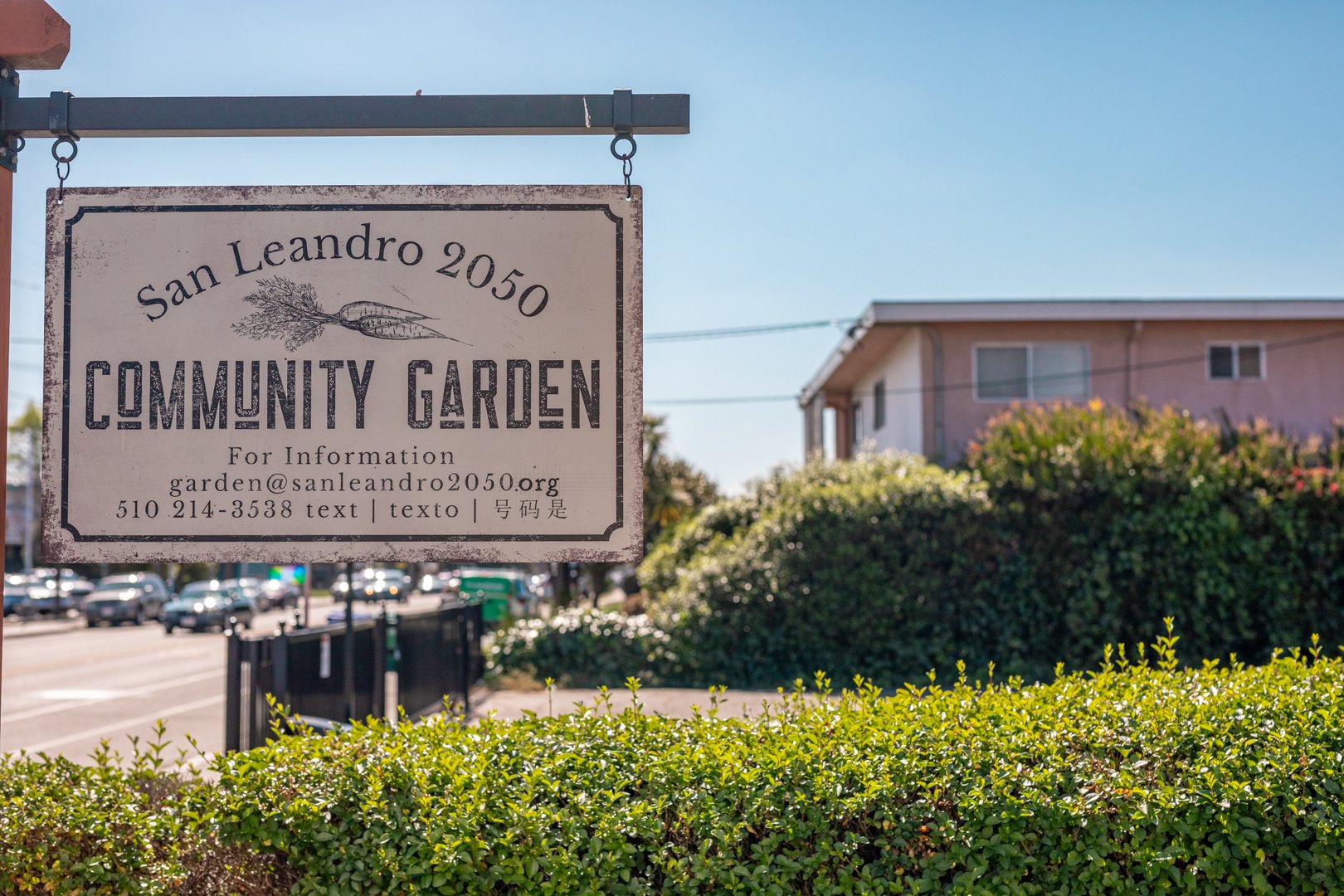
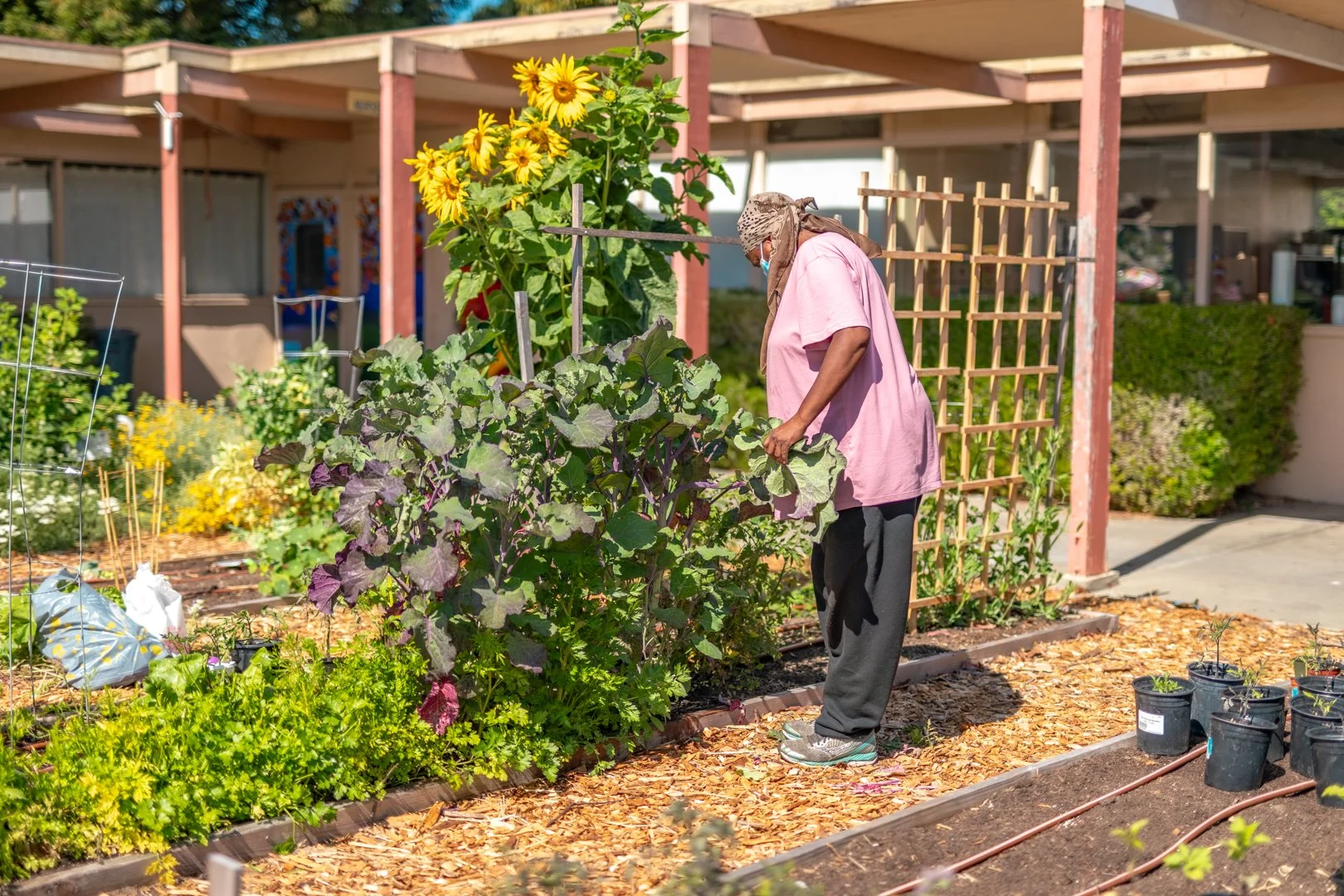
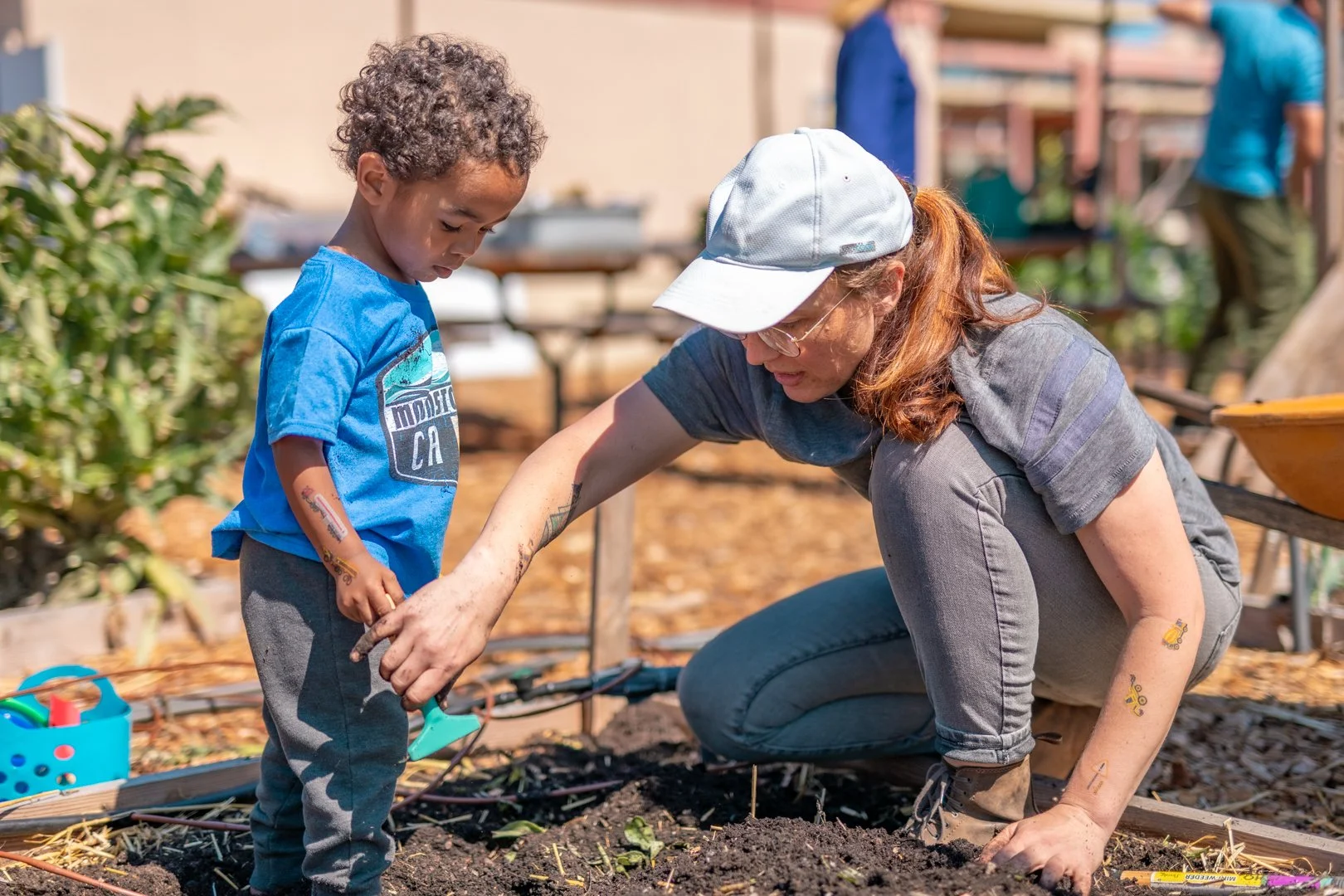
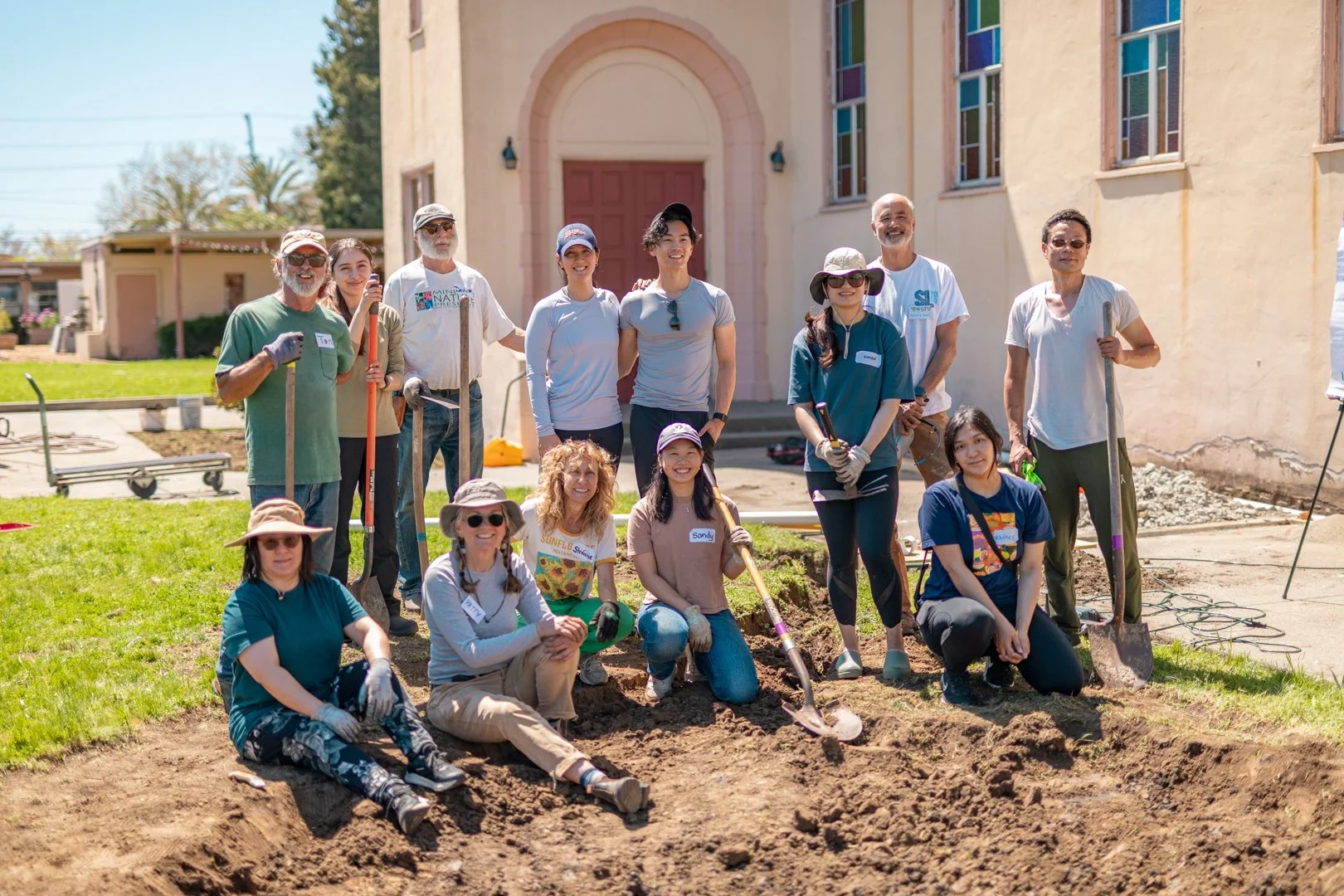
In 2022, the initiative shifted as we learned this. Through a partnership with Bethel Community Church, San Leandro 2050 helped establish a resilience center that functions as both gathering space and climate adaptation asset. A previously underutilized garden was transformed into an active community hub. Regular coffee conversations created continuity across months and years. Physical improvements are underway to ensure the site can operate as a disaster-ready resilience center.
This phase represents movement toward collaboration and shared stewardship. Residents are not only advising on priorities today, but also participate in maintaining the social and physical infrastructure of a more resilient San Leandro.